
New Records
معلومات التسجيل | Record Details
Publication date
Resource type
Language
Full Record
Public Domain - الملكية العامة
https://orcid.org/0009-0007-8265-8250
DOI
License Types
Author Bio
Key Words
تحديث الملف Timeline
Research Dashboard
Current Version: V1
Status: publish
DOI: https://doi.org/10.69661/3006-6697jp0006
Total Events: 3
Total Versions: 1
Last Activity: 2026-07-12 21:58:40
Version Repository
| Version | File | Date | Download |
|---|---|---|---|
| V1 (Current) | اكابرس-الشريان-الرقمي-في-مضيق-هرمزنهائي.docx | 2026-09-22 06:49:04 | Download |
V1
- accepted - 2026-07-12 21:58:40
- published - 2026-07-12 21:58:40
- doi_assigned - 2026-07-12 21:58:40
Details (EN)
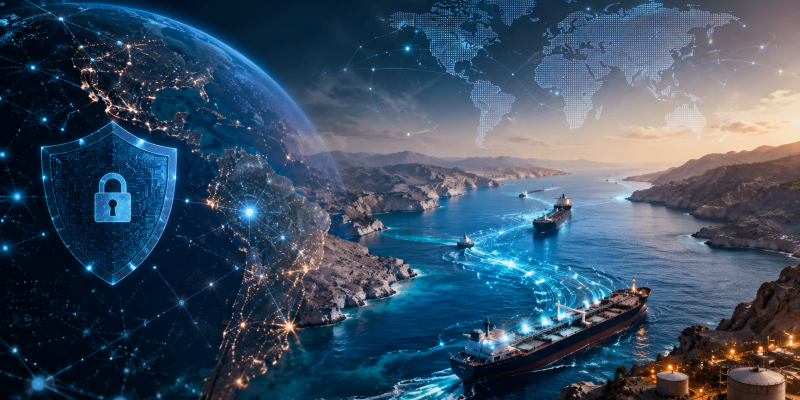
Undersea Cables in the Strait of Hormuz: A Study in Cyber-Geopolitics and its Impact on Global Economic Security
Mohamed Zidan Awwad Abdelhamid Khafagy
Researcher in Gulf-Iranian Relations and International Politics, Université Privée Africaine Franco-Arabe (UPAFA) – Mali
Trevisa Journal of Humanities and Social Sciences
This study aims to explore the dimensions of the intersection between traditional geopolitics and cybersecurity, focusing on the Strait of Hormuz not only as a vital chokepoint for global energy supplies but also as a digital backbone and critical infrastructure through which major submarine internet cables pass, connecting the Arabian Gulf with Asia and Europe. The study addresses a core problem: the vulnerability of global digital dependence on maritime corridors located in high-stakes geopolitical conflict zones, and the attempts by regional powers, such as Iran, to impose legal and technical sovereignty over this international infrastructure as a tool for strategic leverage. Utilizing the “Comparative Approach,” the “Systems Analysis Approach,” and “Geopolitical Analysis Tools,” the study examines the economic impact of undersea cable disruptions during crises. This impact extends beyond standard service outages to disrupting digital supply chains, increasing the costs of alternative capacities and insurance, and elevating latency in financial markets. The study concludes that the potential disruption of cables in the Strait of Hormuz serves as a complex strategic blackmail tool equivalent to a traditional naval blockade. It recommends accelerating the development of alternative land and sea routes via other regional corridors to mitigate total reliance on the Strait.
Title
Author
Author's job
Publisher
Abstract
التفاصيل (بالعربية)
العنوان
المؤلف
وظيفة المؤلف
الناشر
الملخص
الشريان الرقمي في مضيق هرمز: دراسة في الجيوبوليتيك السيبراني وأثره على الأمن الاقتصادي العالمي
محمد زيدان عواد عبد الحميد خفاجي
باحث في العلاقات الخليجية-الإيرانية والسياسات الدولية، جامعة إفريقيا الفرنسية العربية – مالي
مجلة تريفيكسا للعلوم الانسانية والاجتماعية
تهدف هذه الدراسة إلى استكشاف أبعاد التداخل بين الجيوبوليتيك التقليدي والأمن السيبراني، من خلال التركيز على مضيق هرمز ليس فقط كممر حيوي لإمدادات الطاقة العالمية، بل كعصب رقمي وبنية تحتية حرجة تمر عبره وتتصل بنطاقه الجغرافي أنظمة كابلات بحرية رئيسية للإنترنت وحزم البيانات الشاملة التي تربط دول الخليج العربي بآسيا وأوروبا. تنطلق الدراسة من معضلة أساسية تتمثل في هشاشة الاعتماد الرقمي العالمي على ممرات مائية تقع في مناطق توتر جيوسياسي مرتفع، ومحاولات بعض القوى الإقليمية الساحلية كإيران فرض “حوكمة قانونية وفنية” استثنائية على هذه البنية التحتية الدولية كأداة للضغط الاستراتيجي. تعتمد الدراسة على “المنهج المقارن” و”اقتراب تحليل النظم” بالإضافة إلى وظائف “أداة التحليل الجيوسياسي” لبيان الأثر الاقتصادي لتعطل هذه الكابلات في أوقات الأزمات، والذي يتجاوز انقطاع الخدمات التقليدية إلى اضطراب سلاسل التوريد الرقمية، وارتفاع كلفة السعات البديلة والتأمين، وزيادة زمن الاستجابة في الأسواق المالية. وتوصلت الدراسة إلى أن التهديد الموجه للبنية الرقمية في مضيق هرمز يمثل أداة ابتزاز استراتيجي معقد توازي خطورة الحصار البحري التقليدي، وخلصت إلى توصيات أبرزها ضرورة تسريع بناء مسارات برية وبحرية بديلة عبر ممرات إقليمية أخرى لتقليل الاعتماد المطلق على المضيق.
الاقتباس (Citation)
Cite This Research
APA 7
Copied
MLA 9
Copied
Chicago 17
Copied
Harvard
Copied
Vancouver
Copied
IEEE
Copied
BibTeX
Copied
RIS
Copied
يتم توليد التوثيق من معرف DOI عبر Crossref.
No related records found.